


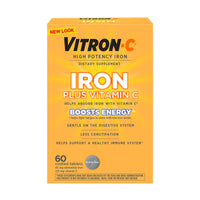
Vitron-C high-potency iron supplement with vitamin C
Sale price
$13.19
Regular price
$14.99
Save $1.80
Clicking the button above supports our work. As an Amazon Associate, we earn a small commission on qualifying purchases at no extra cost to you. We only recommend products we believe in.
At a Glance
Vitron-C is a higher-potency iron supplement paired with vitamin C: 65 mg of elemental iron plus 125 mg of vitamin C in one daily tablet. The vitamin C is there for a reason, since it helps your body absorb the iron. It's aimed at rebuilding a real iron deficit, in pregnancy or postpartum, rather than gentle topping-up. Because it carries more iron than a slow-release option, it can be more constipating for some people. Get your levels tested first, and take it on your provider's guidance rather than by assumption.
Iron only helps if your body can take it in. That's the quiet job the vitamin C is doing here.
Description
An iron supplement with vitamin C is built around one fact: vitamin C markedly improves how much iron your body absorbs from a tablet. Vitron-C puts the two together, 65 mg of elemental iron alongside 125 mg of vitamin C, in a single daily tablet. That pairing is why it's a common pick for actually rebuilding low iron rather than just maintaining it, and why people take it when a blood test has shown a real deficit.
Iron demand rises sharply in pregnancy as your blood volume expands, and iron-deficiency anemia is the most common anemia expecting and new mothers face. It's also a postpartum issue: childbirth involves real blood loss, and rebuilding iron stores afterward is part of recovering your energy. The 65 mg here is a higher elemental dose than a routine maintenance supplement, which is the point when you're climbing out of a deficit, and the vitamin C helps you get more from each tablet.
The honest trade-off is tolerability. More elemental iron tends to mean more chance of constipation and stomach upset, and the vitamin C helps absorption, not comfort. If a standard iron tablet already troubled your stomach, a slow-release option may suit you better, and Vitron-C is the choice when you tolerate iron reasonably well and need to move the needle. As with any iron, test first, because the right dose depends on your actual levels and your prenatal already provides some.
Why it helps
- Iron plus vitamin C: 125 mg of vitamin C to improve how much of the 65 mg iron you absorb
- Higher elemental dose: 65 mg, aimed at rebuilding a confirmed deficit rather than light maintenance
- Pregnancy and postpartum: useful for restoring iron after the blood loss of childbirth, not only during pregnancy
- Once daily, dye-free: one tablet a day, free of artificial colors, vegan and gluten-free
- Self-contained: the vitamin C is already in the tablet, so you don't need to remember orange juice
Best for
- People with a confirmed iron deficiency or anemia who need to rebuild stores
- Anyone recovering iron levels postpartum after childbirth blood loss
- Those who tolerate iron reasonably well and want potency plus absorption in one tablet
- People who'd rather have the vitamin C built in than pair a separate iron with juice
- Less ideal if standard iron already upset your stomach. A slow-release option is gentler
Related reading
How iron fits into the bigger nutrition picture is in Mindy's guide to choosing a prenatal vitamin, which covers how much iron your prenatal already provides. If you're taking this after birth, her postpartum recovery guide puts iron alongside the rest of rebuilding your energy in the fourth trimester.
Explore more
This is the potency-and-absorption option in our pregnancy essentials collection. If your problem is that iron upsets your stomach rather than that you need more of it, Slow Fe is the slow-release, gentler-on-the-gut alternative. Between the two, Vitron-C is the one for rebuilding a deficit and Slow Fe is the one for staying on iron without the side effects.
A note from Mindy on higher-potency iron
As a nurse practitioner in OB-GYN, here's how I'd frame this one. The number that matters on an iron supplement is the elemental iron, and 65 mg is a real, treatment-level amount. Pairing it with vitamin C is smart, because vitamin C genuinely improves iron absorption, and that's the honest reason this combination exists rather than marketing.
Where I'd slow you down is the assumption that more iron is simply better. It isn't. The right dose is the one your blood levels call for, and taking a high-potency iron you don't need mostly buys you constipation. So test first, hemoglobin and ideally ferritin, and let your provider tell you whether a 65 mg iron is the right tool or more than you need. Remember your prenatal already contains iron on top of this.
If you and your provider land on this one, a few things make it work better. Take it away from calcium, antacids, coffee and tea, which block absorption. Expect dark stools, which are normal. And keep it far out of reach of children, because iron overdose is one of the most dangerous accidental poisonings in young kids. Postpartum, this is a reasonable way to rebuild stores after the blood loss of birth, and again, a quick check of your levels tells you how long you actually need it.
— Mindy Motta, FNP-C
FAQs
Why does Vitron-C combine iron with vitamin C?
Because vitamin C improves how much iron your body absorbs from a supplement. Putting 125 mg of vitamin C in the same tablet as the 65 mg of iron means you get more out of each dose without having to remember to take it with orange juice. It's one of the few supplement combinations where the pairing has a clear, practical reason behind it.
Is Vitron-C safe during pregnancy?
Iron is a normal part of pregnancy care, and this is a higher-potency option intended for treating a real deficiency rather than light maintenance. The safety question is the amount, not the iron itself: your prenatal already provides some, and 65 mg on top is a treatment-level dose, so take it on your provider's guidance after a blood test. Keep it well away from children, since iron overdose is dangerous for them.
Is 65 mg of iron too much for pregnancy?
It depends entirely on your levels. Routine pregnancy needs are lower and often covered by a prenatal, while treating confirmed iron-deficiency anemia commonly calls for a higher dose like this. That's why testing comes first: 65 mg is the right amount for some people and more than others need. Your provider decides based on your hemoglobin and ferritin, not on how tired you feel.
Will Vitron-C constipate me?
It can. More elemental iron tends to mean more chance of constipation, and the vitamin C here helps absorption, not comfort. If you tolerate iron reasonably well, it's manageable with fluids, fiber and movement. If a standard iron tablet already troubled your stomach, a slow-release option like Slow Fe may suit you better, and taking iron every other day is worth asking your provider about.
Can I take Vitron-C with my prenatal vitamin?
You can, but you're then stacking iron on top of what the prenatal already contains, so confirm the total with your provider. For absorption, timing matters: keep the iron a couple of hours apart from the calcium in your prenatal, and away from coffee, tea and antacids, all of which reduce how much iron you take in.
Is Vitron-C good for postpartum recovery?
It can be. Childbirth involves real blood loss, and rebuilding iron stores is part of getting your energy back in the weeks after. A higher-potency iron with vitamin C is a reasonable way to do that, guided by a check of your levels so you know how much you need and for how long. If you're breastfeeding, keep your provider in the loop as with any supplement.
When should I take Vitron-C for the best absorption?
Between meals is ideal, since iron absorbs best on a relatively empty stomach, and the built-in vitamin C already gives it an absorption boost. Keep it separate from calcium, antacids, coffee and tea. If taking it between meals upsets your stomach, a little food is a fair trade for staying consistent, which matters more than perfect timing.
Vitron-C or Slow Fe, which iron should I pick?
Match it to your problem. Vitron-C's higher elemental iron plus vitamin C suits rebuilding a confirmed deficit when you tolerate iron reasonably well. Slow Fe's slow-release design suits tolerability, and it's the better pick if regular iron upset your stomach or constipated you. One is built for potency, the other for staying on iron comfortably.


Vitron-C high-potency iron supplement with vitamin C
Sale price
$13.19
Regular price
$14.99
Save $1.80

Vitron-C
Vitron-C high-potency iron supplement with vitamin C