


Amazon Basic Care Famotidine 20mg Heartburn Relief - 200 Tablets
Regular price
$13.91
Clicking the button above supports our work. As an Amazon Associate, we earn a small commission on qualifying purchases at no extra cost to you. We only recommend products we believe in.
At a Glance
Famotidine is the generic of Maximum Strength Pepcid AC, an H2 blocker that lowers how much acid your stomach makes. Unlike an antacid, you take it before a meal to prevent heartburn for up to 12 hours, which makes it the step up when reflux is frequent or predictable rather than occasional. It's well studied and considered safe in pregnancy. Worth knowing: this is famotidine, not the recalled ranitidine (old Zantac), which is a different drug. As with any medicine in pregnancy, run frequent or ongoing use past your provider.
For the heartburn you can set your watch by. Take it before the meal, not after the burn.
Description
Famotidine for pregnancy heartburn is the next step when antacids aren't keeping up. This is Amazon Basic Care's generic of Maximum Strength Pepcid AC, 20 mg of famotidine per tablet. Famotidine is an H2 blocker, which means it reduces how much acid your stomach produces in the first place, rather than neutralising acid that's already there the way TUMS does. You take it ahead of a meal, and it can prevent heartburn for up to 12 hours, so it fits the reflux that shows up often or on a schedule.
That "take it before" part is the whole point. An antacid is a fire extinguisher you grab once the burning starts. An H2 blocker is closer to turning the heat down before you cook, so it suits the person who knows dinner or lying down is going to bring heartburn and would rather head it off. For a lot of people in the second half of pregnancy, when reflux becomes a nightly event, that shift from reacting to preventing is what actually gives them their evenings back.
Two things worth saying plainly. Famotidine is well studied in pregnancy and considered a safe second-line option after antacids, but because it's a medicine you'd take regularly, frequent or ongoing use is worth running past your provider rather than deciding alone. And famotidine is not ranitidine. Ranitidine, the old Zantac, was pulled from the market over a contamination concern. Famotidine (Pepcid) is a different H2 blocker that was not part of that recall, and it's the one clinicians now reach for.
Why it helps
- Prevents, doesn't just relieve: lowers acid production, so taken before a meal it heads heartburn off
- Lasts up to 12 hours: one tablet can cover a meal or a night, unlike an on-demand antacid
- The step up from antacids: the standard next move when TUMS isn't keeping ahead of frequent reflux
- Well studied and considered safe: a second-line option supported in pregnancy
- Not the recalled ranitidine: famotidine is the current H2 blocker of choice, unaffected by the old Zantac recall
Best for
- Frequent or predictable heartburn that you can see coming
- People reaching for antacids several times a day without staying ahead of it
- Nighttime reflux, where a dose can cover the hours you're lying down
- Anyone who'd rather prevent the burn than chase it after a meal
- Best used with your provider's okay for regular use, since it's a daily-type medicine rather than an occasional chew
Related reading
Where heartburn sits among the usual pregnancy complaints, and the habits that reduce it, are in Mindy's guide to common pregnancy symptoms and how to relieve them. Lifestyle changes do real work here, and they lower how often you need any medicine at all.
Explore more
Famotidine is the second rung for heartburn in our pregnancy essentials collection. Below it, for occasional flares, is TUMS, a fast-acting antacid you chew in the moment. Many people keep both: TUMS for surprise flares, famotidine before the meals they know will cost them. If you also take iron, mention it to your provider, since acid reducers can affect how some nutrients are absorbed.
A note from Mindy on H2 blockers, and the pain that isn't heartburn
As a nurse practitioner in OB-GYN, here's how I'd place famotidine. When heartburn stops being an occasional nuisance and becomes a nightly event, moving from an as-needed antacid to a preventive H2 blocker is the standard, sensible step, and famotidine is well studied and considered safe in pregnancy. I'd still want you to loop in your provider before you're taking it every day, simply because regular medication in pregnancy deserves a quick conversation.
Two clarifications I give people. Yes, this is the generic of Pepcid, and no, it is not the recalled Zantac. That was ranitidine, a different drug, pulled over a contamination issue. Famotidine wasn't part of that, and it's what we reach for now.
And the same warning I put on the antacid page, because it matters even more when heartburn is severe: in the second half of pregnancy, bad upper-abdominal or right-side pain under the ribs can be preeclampsia rather than reflux, particularly alongside a headache that won't lift, vision changes, or sudden swelling. An acid reducer will not fix that, and it's dangerous to assume it's just heartburn. If your pain is severe, won't settle, or comes with those symptoms, get seen the same day. Our guide to preeclampsia walks through what to watch for.
— Mindy Motta, FNP-C
FAQs
Is famotidine (Pepcid) safe during pregnancy?
Famotidine is well studied in pregnancy and considered a safe second-line option for heartburn, used when antacids aren't enough. Because it's a medicine you'd typically take regularly rather than once in a while, it's worth clearing frequent or ongoing use with your provider. It's the H2 blocker clinicians generally reach for in pregnancy.
Is famotidine the same as the recalled Zantac?
No. The recalled product was ranitidine, the old Zantac, which was pulled over a contamination concern. Famotidine is a different H2 blocker, sold as Pepcid, and it was not part of that recall. It's the acid reducer clinicians now use in its place, which is why you'll see famotidine rather than ranitidine on shelves.
What's the difference between famotidine and TUMS in pregnancy?
They work differently. TUMS is an antacid that neutralises acid on contact, so you take it when heartburn is already burning. Famotidine is an H2 blocker that reduces how much acid your stomach makes, so you take it before a meal to prevent heartburn for up to 12 hours. TUMS suits occasional flares; famotidine suits frequent or predictable reflux. Both are considered safe in pregnancy.
When should I switch from antacids to famotidine?
A good rule of thumb is when you're reaching for antacids several times a day and still not staying ahead of the heartburn. That's the point where a preventive H2 blocker usually controls things better than chasing each flare with a chew. Since it means taking a medicine regularly, run the switch past your provider, who may suggest taking it before meals or at bedtime depending on your pattern.
How do I take famotidine for heartburn?
Follow the label, which for prevention means taking it 10 to 60 minutes before a meal you expect to trigger heartburn; relief lasts up to 12 hours. Don't exceed the daily maximum on the package. If you find you need it around the clock or beyond the label's short-term use, that's a conversation with your provider rather than a reason to take more.
Can I take famotidine and TUMS together?
Many people use both, in different roles: famotidine before meals to prevent, and TUMS for the occasional flare that gets through. They work by different mechanisms, so combining them is common. If you're relying on both heavily every day, that's a sign your reflux warrants a provider's input rather than more over-the-counter medicine.
Does famotidine affect my iron or prenatal absorption?
Reducing stomach acid can affect how well the body absorbs some nutrients, including iron, over time. It's not a reason to avoid famotidine if you need it, but it's worth mentioning to your provider if you're also treating low iron, so the timing and your levels get watched. Keep taking iron as directed and space it from calcium-based antacids like TUMS.
When is heartburn actually something more serious?
In the second half of pregnancy, severe or persistent pain in the upper abdomen or under the right ribs can be preeclampsia rather than heartburn, especially with a headache that won't lift, vision changes, or sudden swelling. An acid reducer won't touch that. If your pain is severe, doesn't settle, or comes with those symptoms, get seen the same day rather than assuming it's reflux.
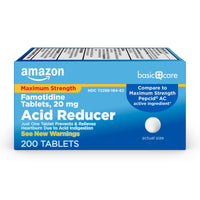


Amazon Basic Care Famotidine 20mg Heartburn Relief - 200 Tablets
Regular price
$13.91
Amazon Basic Care
Amazon Basic Care Famotidine 20mg Heartburn Relief - 200 Tablets