


TUMS extra strength chewable antacid tablets for heartburn relief
Regular price
$17.59
Clicking the button above supports our work. As an Amazon Associate, we earn a small commission on qualifying purchases at no extra cost to you. We only recommend products we believe in.
At a Glance
TUMS is a calcium carbonate antacid, and it's the usual first thing recommended for heartburn in pregnancy because it works in seconds and is considered safe. You chew one when heartburn flares. Two things worth knowing: each tablet is also a dose of calcium, so it stacks with your prenatal and shouldn't be overdone, and the calcium blocks iron absorption, so keep TUMS a couple of hours apart from any iron supplement. Follow the label's daily maximum, and if you're needing it constantly, that's the sign to talk to your provider about a step up.
The one that lives in the nightstand drawer by the third trimester. Fast, familiar, and fine to reach for.
Description
TUMS for pregnancy heartburn is one of the most common recommendations you'll hear from an OB or midwife, and for good reason. TUMS is a calcium carbonate antacid, which means it neutralises stomach acid on contact rather than turning it off, so it works within seconds when heartburn flares. That fast, on-demand relief is exactly what you want for the burning that shows up after a meal or when you lie down, and calcium carbonate antacids are considered a safe first-line choice in pregnancy.
Heartburn is almost a rite of passage in pregnancy. Progesterone relaxes the valve at the top of the stomach, and later the growing uterus presses up against it, so acid slips back up more easily than it used to. This is the tablet for the everyday version of that: chew one when symptoms hit, get relief quickly, move on. It's an antacid, not a daily preventive, so it shines for occasional or unpredictable flare-ups rather than all-day reflux.
Two things to get right. First, each tablet is also a dose of calcium, so it adds to the calcium already in your prenatal and your diet. That's usually fine, but it's a reason to follow the label's daily maximum rather than chewing them like candy. Second, and this is the one people miss: the calcium in TUMS blocks iron absorption. If you take an iron supplement, keep it a couple of hours apart from your TUMS, or you'll blunt the iron you're trying to absorb.
Why it helps
- Works in seconds: neutralises acid on contact, which is what you want for a sudden flare
- First-line and safe: calcium carbonate antacids are the usual first recommendation for heartburn in pregnancy
- On-demand: take it only when you need it, no daily routine required
- Chewable and portable: a resealable bottle for the nightstand, the bag, the car
- A little calcium too: a minor bonus, though it's also the reason not to overdo them
Best for
- The occasional or after-meal heartburn that most pregnancies bring
- Anyone who wants fast relief in the moment rather than a daily pill
- People who'd rather start with the simplest, first-line option
- Keeping one by the bed for the reflux that hits when you lie down
- Less suited to frequent, all-day reflux. If you're taking them constantly, an H2 blocker is the next step
Related reading
Heartburn is one of many things the first and third trimesters throw at you. Mindy's guide to common pregnancy symptoms and how to relieve them covers where heartburn fits and the lifestyle changes that cut down how often you reach for a tablet at all, like smaller meals and not lying down right after eating.
Explore more
TUMS is the first rung in our pregnancy essentials collection for heartburn. If you find you're using it several times a day, the next step is a longer-acting acid reducer: famotidine (generic Pepcid) is an H2 blocker you take before meals for up to 12 hours of prevention. And if you're also taking iron, remember to space it apart from your TUMS.
A note from Mindy on heartburn, and one thing that isn't
As a nurse practitioner in OB-GYN, I'll say first that TUMS is a fine, safe thing to reach for, and most pregnant people will. Chew one when heartburn hits. Keep them apart from your iron by a couple of hours, since the calcium blocks iron absorption. And don't treat the daily maximum on the label as a suggestion, because the calcium adds up with your prenatal and your food.
Here's the part I most want you to read. In the second half of pregnancy, pain in the upper belly or under your right ribs that feels like bad heartburn can sometimes be preeclampsia, not reflux, especially if it comes with a headache that won't quit, changes in your vision, or sudden swelling. Preeclampsia is serious and it can escalate quickly. If your "heartburn" is severe, persistent, doesn't ease with an antacid, or comes packaged with any of those other symptoms, don't wait it out. Call your provider or get seen the same day. You can read more in our guide to preeclampsia.
Ordinary heartburn that eases with a tablet and good habits is nothing to worry about. It's the severe, stubborn, or differently-packaged version that's worth a call. I would always rather you checked.
— Mindy Motta, FNP-C
FAQs
Is TUMS safe to take during pregnancy?
Yes. Calcium carbonate antacids like TUMS are generally considered a safe, first-line choice for heartburn in pregnancy, which is why OBs and midwives routinely suggest them. The main caution is quantity: each tablet is also a dose of calcium that adds to your prenatal and diet, so follow the label's daily maximum rather than taking them constantly, and check with your provider if you need them all day.
How many TUMS can I take while pregnant?
Follow the maximum on the label and don't exceed it. The reason there's a ceiling is the calcium: it stacks with the calcium in your prenatal and your food, and very high intake isn't good for you. If you're regularly hitting the daily limit to keep heartburn under control, that's a sign to talk to your provider about a longer-acting option rather than simply taking more antacid.
Can I take TUMS with my iron supplement?
Not at the same time. The calcium in TUMS blocks iron absorption, so taking them together means you get less of the iron you're trying to absorb. Space them a couple of hours apart. This is one of the most common timing mistakes in pregnancy, since a lot of people take iron and antacids around the same meals.
Does TUMS work for pregnancy heartburn or just mask it?
It relieves it, it doesn't mask it. TUMS neutralises stomach acid on contact, so it treats the burning quickly rather than covering it up. What it doesn't do is prevent heartburn ahead of time, because it only works once acid is already there. For heartburn you can predict or that lasts all day, a preventive H2 blocker like famotidine is a better fit.
TUMS or Pepcid for pregnancy heartburn, which should I use?
Match it to the pattern. TUMS is best for occasional, in-the-moment flares because it works in seconds. Famotidine (generic Pepcid) is an H2 blocker you take before meals to prevent heartburn for up to 12 hours, which suits frequent or predictable reflux. Many people start with TUMS and add or switch to famotidine when they're reaching for antacids several times a day. Both are considered safe in pregnancy.
Can I keep TUMS by the bed for nighttime heartburn?
Yes, and a lot of people do, since reflux is often worse lying down. Alongside it, raising the head of your bed and not eating in the couple of hours before you lie down both help. If nighttime heartburn is a regular thing rather than an occasional one, a bedtime dose of an H2 blocker may control it better than antacids through the night.
When should heartburn make me call my provider?
Call if antacids and habits aren't controlling it, if you have trouble or pain swallowing, if you're vomiting blood or passing black stools, or if you're losing weight. Most importantly, in the second half of pregnancy, severe or persistent pain in your upper abdomen or under your right ribs, especially with a headache, vision changes or swelling, can be preeclampsia rather than heartburn and needs to be checked the same day.
Are the fruit-flavored TUMS fine, or do I need a special kind?
The flavor doesn't matter; the active ingredient is calcium carbonate either way. There's no special pregnancy formulation you need to hunt for. What matters is that it's a calcium carbonate antacid, that you stay within the label's daily maximum, and that you keep it apart from iron. Avoid antacids based on sodium bicarbonate in pregnancy, but that isn't what TUMS is.
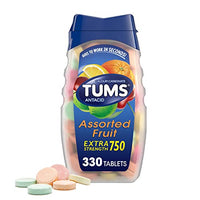


TUMS extra strength chewable antacid tablets for heartburn relief
Regular price
$17.59

TUMS
TUMS extra strength chewable antacid tablets for heartburn relief