
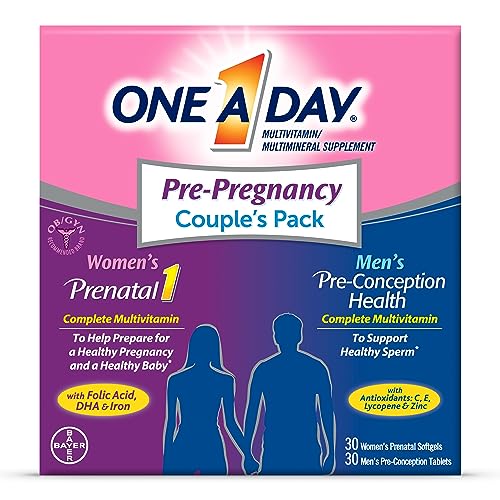
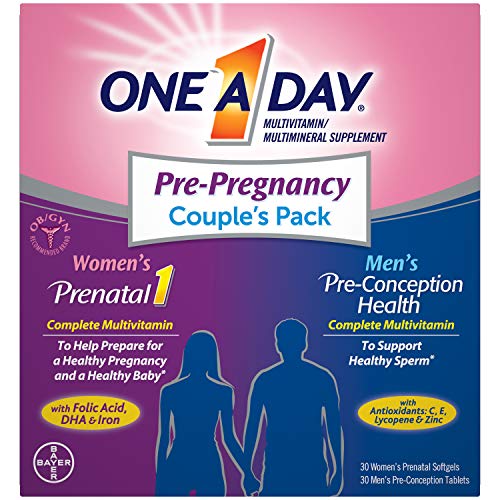
One A Day men's & women's pre-pregnancy couple's pack multivitamin
Regular price
$29.88
Clicking the button above supports our work. As an Amazon Associate, we earn a small commission on qualifying purchases at no extra cost to you. We only recommend products we believe in.
At a Glance
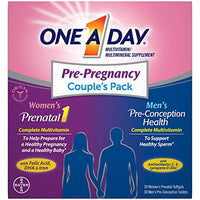
Two separate formulas in one box: a folic acid prenatal for her and an antioxidant multivitamin for him with vitamins C and E, selenium, zinc and lycopene. Thirty days each. The male half rests on the antioxidant-and-sperm literature, where the 2022 Cochrane review of 90 studies and 10,303 men found the evidence too uncertain to promise a live birth benefit. Sperm takes about 74 days to make, so give it three months. Its real value may be that it makes preconception a shared job.
You've been the one reading labels, tracking cycles, booking the appointments. Handing him a bottle is partly about zinc and selenium and partly about not carrying this by yourself.
Description
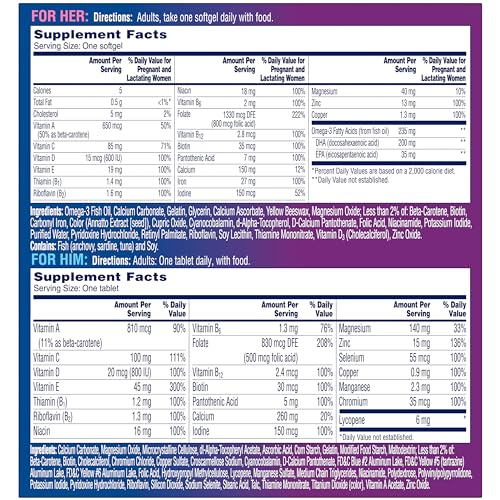
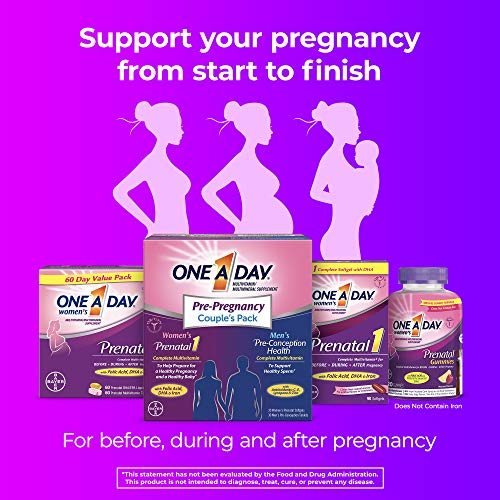
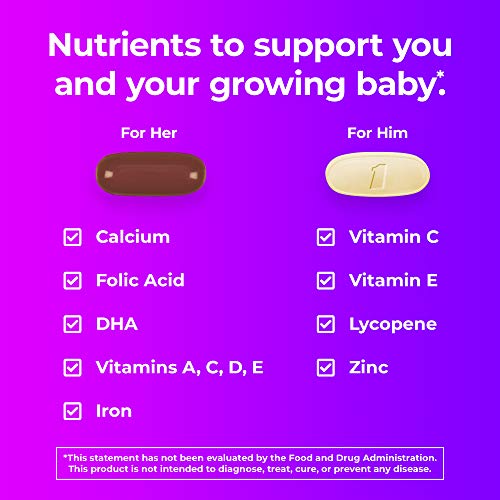
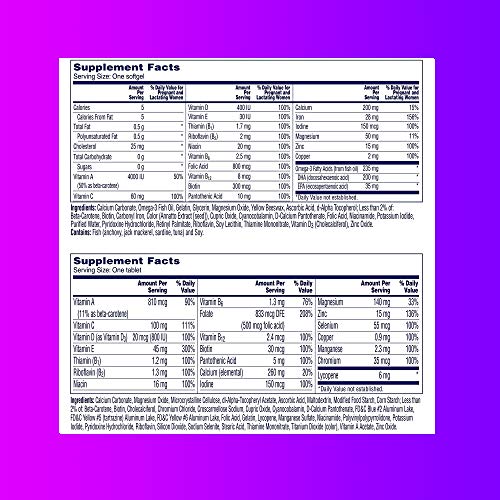
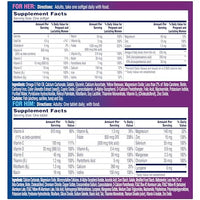
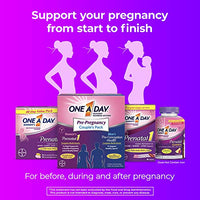
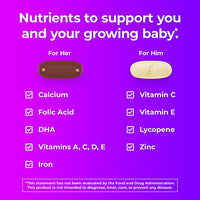
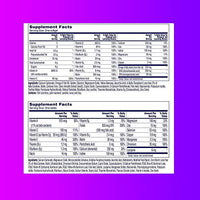
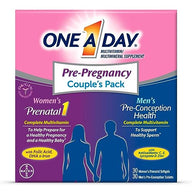
These prenatal vitamins for couples from One A Day come as two separate formulas in one box: a women's prenatal softgel with folic acid, and a men's pre-conception tablet built around antioxidants, specifically vitamins C and E, selenium, zinc and lycopene. Thirty days of each, one tablet daily per person.
The women's half is straightforward, a standard prenatal formula. The interesting half, and the reason this product exists as a pack rather than two products, is the men's one.
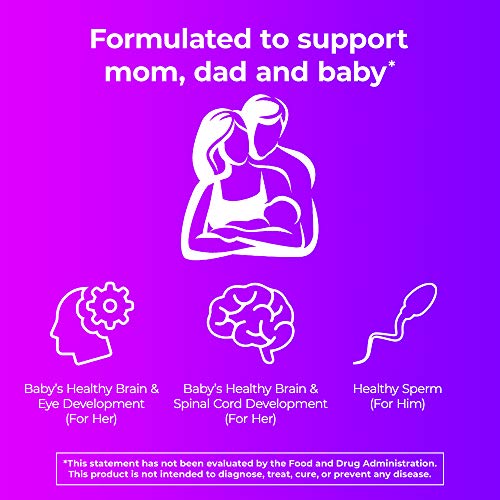
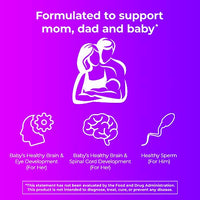
About 40 to 50% of infertility cases involve a male factor, and it is still common for a couple to spend a year optimising one partner's nutrition while the other changes nothing. The rationale for antioxidants is that sperm are unusually vulnerable to oxidative damage, having little internal capacity to repair it, so reducing oxidative stress should in principle improve sperm quality.
The evidence for that principle is real but modest, and we'd rather state it accurately than sell it. The 2022 Cochrane systematic review of antioxidants for male subfertility pooled 90 studies covering 10,303 subfertile men. It found antioxidant supplementation may improve live birth and clinical pregnancy rates, while rating the certainty of that evidence as low, largely because the studies were small, inconsistently designed and often poorly reported. Reviewers also noted that most antioxidant supplements are unregulated, so what's on the label varies. Individual nutrients showed narrower effects: zinc and polyunsaturated fats on sperm concentration, carnitines and combination formulas on motility.
What that adds up to: a reasonable, inexpensive thing to try, not a treatment. If there's a diagnosed male-factor problem, a semen analysis and a urologist are the path, and a supermarket multivitamin is not a substitute for either. If you're simply both preparing, this is a sensible way to do it together.
Why women love it
- Two formulas, one purchase: removes the negotiation about which one he should get
- Antioxidants for him: vitamins C and E, selenium, zinc and lycopene, the nutrient group in the Cochrane review
- Folic acid for her: the standard ACOG-recommended preconception nutrient
- One tablet each per day: simple enough that he'll actually take it
- A month for two people in one box: an inexpensive way to cover you both
- Preconception becomes a shared task rather than one person's project
Best for
- Couples starting to try who want both partners preparing at the same time
- Women who want an easy way to involve a partner without a lecture
- Men who won't take a complicated regimen but will take one tablet
- Couples wanting a low-cost starting point before specialist testing
- Not a treatment for diagnosed male-factor infertility. That needs a semen analysis and a urologist
- Her half is not a complete prenatal for pregnancy. Check iron and DHA against what you need once you conceive
Related reading
Mindy's guide to the fertility workup is the one to read if you're wondering when supplements stop being the answer. It covers semen analysis and what testing looks like for both partners. Her guide to preparing your body for pregnancy covers the three-month window, and how long it really takes to get pregnant sets expectations that are usually more reassuring than what people assume.
Explore more
This pack sits in our fertility essentials for TTC collection, curated by Mindy Motta, FNP-C. If you'd rather choose separately, the One A Day Pregnancy Planning vitamin adds methylfolate on her side. For egg quality specifically, the egg quality supplements collection covers CoQ10 and inositol.
A quiet companion for the wait
Two bottles on the counter is a small daily reminder that you're both in it. For the evenings when that's not enough, our fertility affirmation candles were made for the waiting itself.
A note from Mindy on the half of this that usually gets skipped
I want to talk about the men's bottle, because in my experience it's the one that stays unopened.
Male factor is involved in roughly 40 to 50% of infertility cases, and yet the pattern I see over and over is a woman arriving having overhauled her diet, tracked three cycles and started four supplements, while her partner hasn't had a semen analysis. That's not anyone's fault. It's how the culture around fertility is built. But it means we sometimes spend a year investigating one person when a simple test on the other would have answered the question quickly.
So the most valuable thing about this pack might be structural rather than nutritional. It puts two bottles on the counter and makes preparing a joint activity. That alone changes conversations in my exam room.
On the nutrition, my honest read: antioxidants for sperm are plausible, cheap and worth trying, and the evidence is weaker than the marketing suggests. The 2022 Cochrane review of 90 studies rated the certainty of the live-birth benefit as low. That's not a reason to skip it at this price. It is a reason not to treat three months of vitamins as an intervention with a known outcome.
Timing is worth knowing. Sperm production takes about 74 days, plus a couple of weeks to mature. So nothing he does changes his semen analysis for roughly three months. If you're starting these, start now and judge in the autumn, not in six weeks.
What I'd rank above the supplements, honestly: stopping smoking, cutting back on alcohol, and getting heat away from the testes, meaning laptops, hot tubs and long saunas. Those have better evidence than anything in the bottle, and they're free.
And the clinical line. If you've been trying for twelve months, or six if the female partner is over 35, get a semen analysis. It's a simple, inexpensive, non-invasive test, and it's frequently the fastest route to an answer. Please don't spend another six months on vitamins instead of one morning on a test.
— Mindy Motta, FNP-C
FAQs
Do fertility supplements for men actually work?
The evidence is genuinely mixed. The 2022 Cochrane review pooled 90 studies covering 10,303 subfertile men and concluded antioxidant supplementation may improve live birth and clinical pregnancy rates, but rated that evidence as low certainty because the trials were small and inconsistently designed. Zinc showed some effect on sperm concentration, carnitines and combination formulas on motility. Reasonable to try at this price, not a treatment for a diagnosed problem.
How long before a men's fertility supplement makes a difference?
Give it three months. Sperm production takes roughly 74 days plus additional maturation time, so nothing taken today shows up in a semen analysis for about three months. That's also why studies in this area run for at least twelve weeks. Judging after a few weeks tells you nothing either way.
Which nutrients matter most for sperm health?
The ones with the most study behind them are zinc, selenium, vitamins C and E, coenzyme Q10 and carnitines, plus omega-3 fats. In the Cochrane analysis, zinc and polyunsaturated fats were associated with sperm concentration, while carnitines and combined formulas showed effects on motility. This pack covers vitamins C and E, selenium, zinc and lycopene, and doesn't include CoQ10 or carnitine.
When should my partner get a semen analysis?
After twelve months of trying, or six months if the female partner is over 35, and sooner if there's a known history of testicular injury, surgery, undescended testes, chemotherapy or infection. It's inexpensive, non-invasive and often answers the question faster than months of testing on one partner. Male factor is involved in roughly 40 to 50% of infertility cases.
Is the women's half a complete prenatal?
It's a prenatal formula built around folic acid, and it's suitable for the preconception window. Check the iron and DHA content against what you'll need once pregnant, because requirements change substantially. Most people switch to a dedicated prenatal at a positive test.
Can we both just take a regular multivitamin instead?
Partly. A standard multivitamin covers a lot of the same ground and is a reasonable budget option. What preconception formulas add is folate at the level recommended before pregnancy on her side, and a heavier antioxidant emphasis on his. If cost is the deciding factor, a regular multivitamin plus a separate 400 mcg folic acid for her covers most of it.
What matters more than supplements for male fertility?
Stopping smoking, moderating alcohol, maintaining a healthy weight, and avoiding prolonged heat exposure to the testes from hot tubs, saunas and laptops. These have better evidence than any supplement and cost nothing. Certain medications, including some for hair loss and testosterone therapy, can also significantly affect sperm production and are worth reviewing with a provider.
Should he keep taking it after we conceive?
There's no need. Once conception has happened, the male partner's supplement has done whatever it was going to do. There's no harm in finishing the box, but no reason to reorder. Her prenatal is the one that continues, and she should switch to a full pregnancy formula with iron and DHA.

One A Day men's & women's pre-pregnancy couple's pack multivitamin
Regular price
$29.88
ONE A DAY
One A Day men's & women's pre-pregnancy couple's pack multivitamin